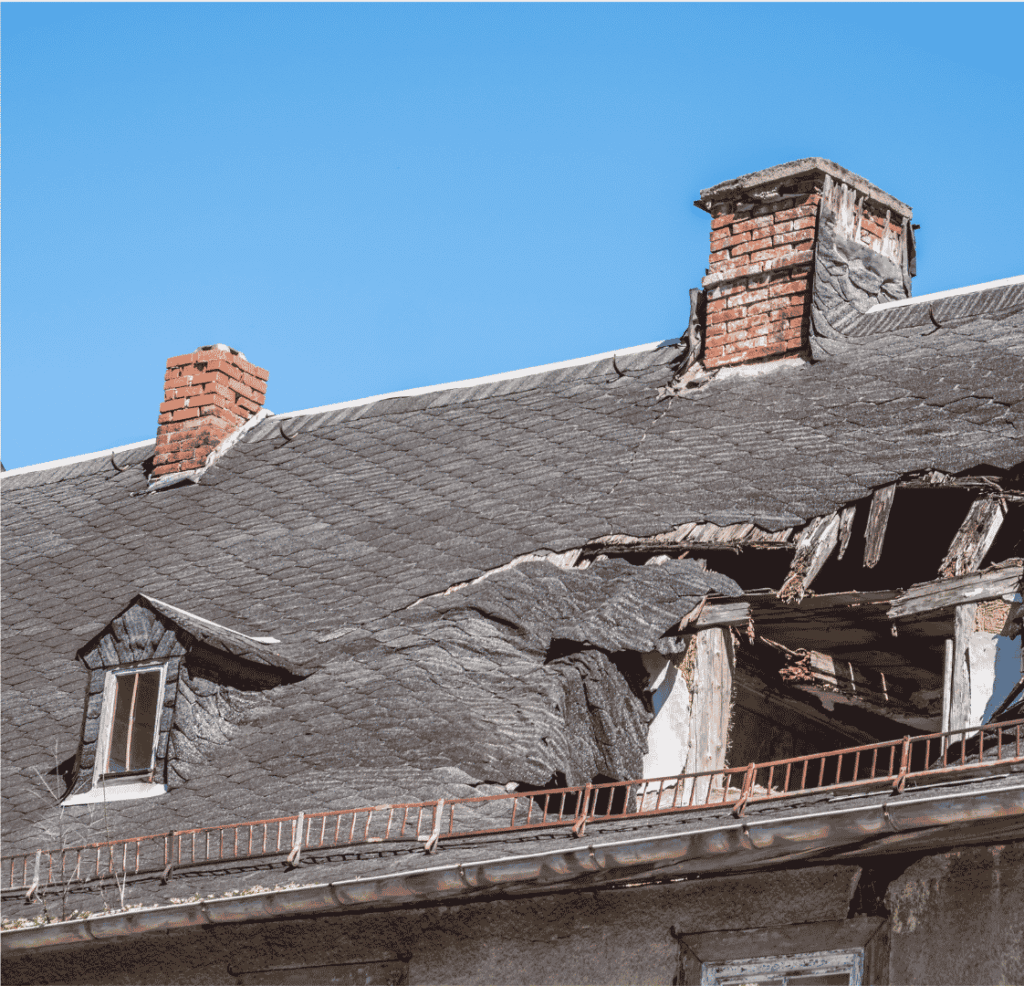
Insurance adjusters separate storm damage from wear and tear by looking at pattern, timing, and location on the roof. Storm damage shows up suddenly, concentrated on the slopes that faced the weather, and ties directly to a specific date. Wear and tear develops gradually and spreads evenly across the whole roof, reflecting the roof simply aging over years rather than a single event.
This distinction determines whether your homeowners policy pays for the repair at all, which is exactly why it matters to understand before an adjuster ever steps onto your roof. We walk clients through this constantly, usually right after they’ve heard some version of “that’s just wear and tear” and aren’t sure whether to push back or accept it.
Why This Distinction Determines Whether Your Claim Gets Paid
Here’s the plain reality of how homeowners insurance works. Policies cover sudden, accidental events, not the ordinary result of a roof getting older. That’s not a loophole or a trick, it’s the basic structure of how the coverage is designed. A roof that’s simply reached the end of its expected lifespan isn’t a covered loss any more than a car needing new brake pads is a covered auto claim.
The friction shows up because storm damage and wear and tear can genuinely look similar to someone without a trained eye. That’s not always intentional misclassification, sometimes it’s a legitimately close call, which is exactly why documentation and a professional assessment matter so much.
What Storm Damage Actually Looks Like
Storm damage tends to follow a distinct pattern, one we described in more detail in our post on signs of hail damage. It’s concentrated on the roof slopes that faced the storm directly, appears suddenly rather than developing over time, and ties to a specific, identifiable date.
Adjusters look for supporting evidence beyond the shingles themselves too. Dents on gutters, vents, and downspouts often show up alongside shingle damage, and granule buildup in gutters right after the event adds further confirmation. When that physical evidence lines up with a confirmed weather event, storm damage becomes much easier to establish.
What Wear and Tear Actually Looks Like
Wear and tear tells a different story entirely. It develops slowly, over years rather than in a single event, and it spreads evenly across the entire roof rather than concentrating on one exposed slope. Shingle edges curl or cup from long-term sun exposure, granule loss shows up uniformly across the whole surface, and the material becomes brittle from years of weathering rather than one impact.
The key word here is uniform. A roof that’s worn out from age looks worn out everywhere, not just on the side that faced last month’s storm.
Storm Damage vs. Wear and Tear at a Glance
| Storm Damage | Wear and Tear | |
|---|---|---|
| Onset | Sudden, tied to a specific event | Gradual, over years |
| Pattern | Random, concentrated on exposed slopes | Even, distributed across the whole roof |
| Supporting evidence | Dents on metal components, granule buildup after the event | Curling, brittleness, consistent aging |
| Timing correlation | Matches a confirmed storm date | No specific event to point to |
| Typically covered | Yes, under most standard policies | No, considered ordinary depreciation |
The Tricky Middle Ground: An Older Roof Hit by a Storm
More often than not, the hardest cases aren’t clean examples of one or the other, they’re an aging roof that gets hit by a genuine storm. An older roof can absolutely still suffer real, covered storm damage. Age alone doesn’t disqualify a claim, but it does raise the bar on documentation, since an adjuster working through this scenario needs clear evidence that the specific damage pattern ties to the storm event rather than simply reflecting a roof that was already due for replacement.
If there’s one lesson we’ve learned inspecting roofs after regional storms, it’s that a roof can show both wear and tear and legitimate storm damage at the same time. The two aren’t mutually exclusive, and a fair assessment separates what the storm actually caused from what was already there before it hit.
How to Confirm a Storm Actually Occurred
One useful, verifiable step is checking whether a storm was officially recorded for your area on the date in question. NOAA’s Storm Events Database, maintained through the National Weather Service, keeps searchable records of severe weather by county and date going back to 1950. If a hailstorm hit your neighborhood, there’s often an official record confirming it, which becomes useful supporting evidence alongside the physical damage itself.
This doesn’t replace a physical inspection, but it adds a layer of objective, third-party confirmation that a specific weather event actually happened when you say it did.
How Documentation Strengthens Your Position
This connects directly to what we covered in filing an insurance claim after storm damage. A professional inspection report that documents the specific pattern, location, and characteristics of the damage gives an adjuster something concrete to evaluate, rather than a homeowner’s account competing against the adjuster’s own quick read of the roof.
Working with an experienced storm and hail damage repair team from the start means that documentation exists before the adjuster’s visit rather than being pieced together afterward. The earlier that documentation happens relative to the storm, the stronger it holds up, since a gap between the storm date and the inspection date is exactly what invites questions about whether the damage is really storm-related.
What to Do If Your Claim Is Classified as Wear and Tear
If an adjuster determines your damage is wear and tear rather than storm-related, that’s not necessarily the final word. It’s reasonable to ask for the specific reasoning behind that determination, request a second inspection, or have your own contractor review the findings and provide an independent assessment.
This isn’t about assuming bad faith on the insurer’s side. It’s about recognizing that these calls involve real judgment, and a second, informed opinion is a normal part of getting an accurate outcome, not an adversarial escalation.
Frequently Asked Questions
Can a roof have both storm damage and wear and tear at the same time?
Yes. An older roof can show general aging while also having genuine, separately identifiable storm damage from a specific event.
Does the age of my roof automatically disqualify a storm damage claim?
No. Age alone doesn’t disqualify a claim, but it does make thorough documentation more important to clearly separate storm damage from existing wear.
How do adjusters use weather data to evaluate a claim?
They can check whether an official storm event was recorded for the area and date in question, which helps confirm whether the timing lines up with the reported damage.
What if I disagree with an adjuster’s wear and tear classification?
You can ask for the specific reasoning, request a second inspection, or have an independent contractor review the roof and provide documentation supporting a different conclusion.
Is wear and tear ever covered by homeowners insurance?
Generally, no. Standard policies are built to cover sudden, accidental events rather than gradual deterioration, which is treated as the homeowner’s maintenance responsibility.
How quickly should I get an inspection after a storm to support my claim?
As soon as reasonably possible. A shorter gap between the storm date and the inspection makes it easier to tie the damage to that specific event.
Do all insurance companies use the same standard for this distinction?
The general principle, sudden and accidental versus gradual, is consistent across most standard policies, though specific language and evaluation practices can vary by insurer.
Can granule loss alone tell an adjuster which category the damage falls into?
Not on its own. Uniform granule loss across the whole roof suggests wear and tear, while random, concentrated granule loss tied to a storm date suggests storm damage.
What role does a roofing contractor play if my claim is disputed?
A contractor can provide an independent inspection and written documentation that either supports your position or gives you an honest, objective read on what the adjuster found.
Is it worth getting a second opinion if my claim is denied?
Often, yes, particularly if you believe the damage pattern doesn’t match typical wear and tear characteristics. A second, documented opinion is a normal part of the process, not an unusual escalation.
Understanding Storm Damage vs. Wear and Tear Before You File
Storm damage and wear and tear are separated by pattern, timing, and location, sudden and concentrated versus gradual and even. Understanding that distinction before an adjuster inspects your roof puts you in a stronger position, especially if your roof is older and the case isn’t a clean, obvious one.
If you’re not sure which category your roof damage falls into, contact TCG Roofing and we’ll take a look and give you an honest, documented assessment before you file.