
Hail damage on a roof rarely looks the way people expect. There’s usually no hole, no missing shingles, nothing dramatic enough to notice from the driveway. Instead it shows up as small bruises, missing granules, and dented metal, damage that’s easy to miss and expensive to ignore.
We get calls all over Northwest Arkansas the day after a storm rolls through, and the conversation almost always starts the same way. “It sounded bad, but the roof looks fine from the ground.” More often than not, that’s exactly the problem. Hail damage does its worst work quietly, and a roof that looks untouched from the street can still be compromised in ways that only show up months later as a leak.
Why Hail Damage Is Easy to Miss
Here’s the thing about hail. Unlike wind damage, which tends to rip a shingle clean off and leave an obvious gap, hail typically bruises rather than removes. The shingle stays in place, so from a quick glance everything looks normal. What’s actually happened underneath is that the impact has compressed the granules and cracked the asphalt mat, and that weak spot won’t show its true colors until water starts working its way in.
This is why we never recommend homeowners rely on a driveway inspection alone. If your area just took a hard hail hit, the smart move is checking a few specific spots, both on the ground and, if it’s safe, on the roof itself.
How Common Is Hail Damage in Northwest Arkansas?
Arkansas isn’t on the edge of hail country, it’s squarely inside it. The state has recorded thousands of hail events since the 1950s, placing it among the top ten states nationally for hail activity, with the busiest stretch of activity typically falling in spring, according to the National Weather Service’s storm data.
For homeowners, the practical takeaway is simple. If you live in NWA long enough, your roof is going to take a hail hit eventually. The question isn’t really if, it’s whether you catch it in time.
Bruised or Dented Shingles
This is the most common sign, and also the one people misread most often. A hail bruise isn’t always a visible dent. Sometimes it’s a soft spot you’d only catch by pressing gently on the shingle, similar to checking a piece of fruit for a bruise. If the spot gives more than the shingle around it, that’s compressed granules and asphalt underneath, and the shingle’s protective layer is compromised even though nothing looks broken.
Dark, circular marks scattered across a slope are the more visible version of the same thing. Those marks are where granules got knocked loose on impact, exposing the black asphalt layer underneath.
Granule Loss in Gutters and Downspouts
One thing that surprises many homeowners is how much information their gutters hold after a storm. Granules dislodged by hail wash down the roof and collect at the low points, so a handful of gritty, sand-like material sitting in your gutters or downspouts is a strong indicator something hit the roof hard enough to matter.
A little granule loss over the years from normal aging is expected. A sudden pile of granules right after a storm is a different story entirely, and it’s one of the clearest before-and-after signals a roof can give you.
Cracked or Split Shingles
Larger hail, or hail hitting an older, more brittle roof, can crack a shingle instead of just bruising it. These cracks tend to run in random directions rather than following a pattern, which is one way to distinguish hail cracking from age-related wear that usually follows the shingle’s natural lines.
A cracked shingle is a direct opening for water, and it’s the kind of damage that turns into an active leak far faster than a bruise does. If you can see daylight through a crack from the attic side, that’s not a wait-and-see situation.
Exposed Roof Mat or Felt
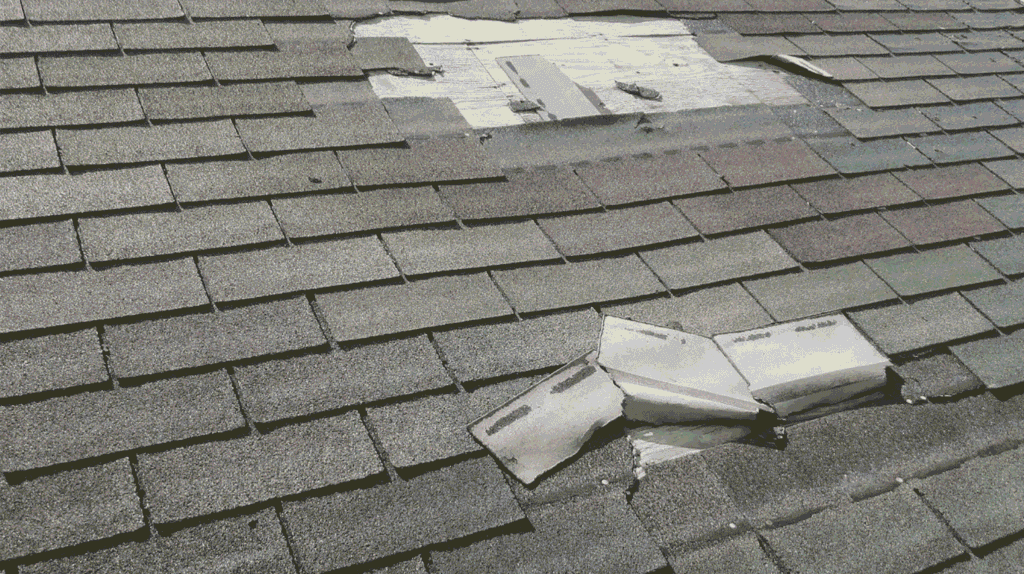
When hail is strong enough to knock granules completely off a section, what’s left behind is the shiny black asphalt mat underneath, and in more severe cases, the felt layer beneath that. Once you’re looking at exposed mat or felt, the roof’s protective barrier has already failed in that spot. This is where we’d typically recommend residential roof repair rather than waiting to see how it holds up.
Damage to Gutters, Flashing, and Roof Vents
Believe it or not, soft metal components often tell you more about a storm than the shingles do. Gutters, downspouts, roof vents, and flashing are made of softer material than asphalt shingles, so they dent more easily and more visibly. Round or tear-shaped dings in these areas are a reliable sign that the hail was large enough to affect the roof itself, even in spots where the shingles look untouched.
Checking these components is often the fastest way to confirm hail activity without needing to get on the roof at all.
Ground-Level Indicators You Can Check Safely
We don’t recommend climbing onto a roof to inspect for hail damage. It’s not worth the fall risk, and a trained eye is going to catch things a homeowner walking the slope might miss anyway. From the ground, though, there’s a lot you can check safely.
| Check This | What Hail Damage Looks Like |
|---|---|
| Window screens | Dents, tears, or bent frames |
| AC unit fins | Flattened or dented fins on the side facing the storm |
| Mailbox and fence caps | Small dings or dents in metal surfaces |
| Gutters and downspouts | Round or tear-shaped dents, or gritty granules collected inside |
| Roof vents (visible from ground) | Dents or visible damage to the cap |
| Deck rails or wood surfaces | Small splintered or bruised spots |
If you’re seeing damage on two or more of these, there’s a good chance the roof took a similar hit and it’s worth having someone take a closer look.
What Happens If Hail Damage Goes Unaddressed
A bruised shingle doesn’t fail overnight, but it doesn’t fully recover either. Every rainstorm and freeze-thaw cycle after the initial impact works on that weak spot a little more, and what started as a soft spot in the granule layer eventually becomes a crack, and a crack eventually becomes a leak.
We see this play out most often with homeowners who noticed the storm, checked the roof from the ground, saw nothing alarming, and moved on. A year or two later they’re dealing with a water stain on a ceiling that traces back to a section of roof that took a hard hit and was never inspected up close.
Why Timing Matters After a Storm
Most homeowners insurance policies have a window for filing a hail damage claim, often measured in months rather than years, and that window starts from the date of the storm, not the date you notice a problem. Getting an inspection sooner rather than later isn’t just about catching the damage early, it also protects your ability to file a claim while the evidence is still fresh and clearly tied to a specific weather event.
Insurance adjusters look for the same signs described above, granule loss, bruising, and collateral damage on metal components, to confirm a claim is tied to a documented storm. The sooner those signs are photographed and inspected, the stronger that documentation holds up.
How a Professional Inspection Works
A proper hail inspection isn’t a quick glance from the ground. It involves walking the entire roof surface, checking each slope for the bruising and granule loss patterns described above, and cross-referencing that with collateral damage on gutters, vents, and flashing. We’re also checking the attic side when accessible, since daylight or water staining there confirms whether a compromised shingle has already started letting moisture through.
What we’re really doing during that walk is building a case, either that the roof is fine and just needs monitoring, or that there’s a documented pattern of impact that supports storm and hail damage repair. That distinction matters both for your roof’s long-term health and for how an insurance claim gets evaluated.
Frequently Asked Questions
How soon after a hailstorm should I have my roof inspected?
As soon as it’s safe to do so, ideally within a few days. Damage is easiest to document while it’s clearly tied to the recent storm, and most insurance policies have a filing window that starts from the storm date.
Can I inspect my own roof for hail damage?
You can check ground-level indicators safely, but a full roof inspection is best left to a professional. Bruised shingles are easy to miss, and walking on a damaged roof adds unnecessary risk.
Does hail damage always mean I need a full roof replacement?
Not necessarily. Isolated bruising or a handful of damaged shingles can often be repaired. Widespread granule loss or exposed mat across multiple slopes is more likely to point toward replacement.
What size of hail actually causes roof damage?
Even hail under an inch in diameter can cause meaningful damage, especially on an older roof. Wind speed, roof angle, and shingle age all affect how much impact the roof actually takes.
Will my insurance cover hail damage repair?
Most homeowners policies cover hail damage, but coverage details and filing deadlines vary by policy. It’s worth reviewing your specific policy or asking your insurer directly.
How can I tell hail damage apart from normal wear and tear?
Hail damage tends to be random and scattered across a slope, while age-related wear usually follows a more even, gradual pattern across the whole roof.
Do metal roofs get damaged by hail too?
Yes, though differently than shingles. Metal roofs typically show dents rather than granule loss or cracking, and severe hail can still affect seams and fasteners.
What should I photograph if I suspect hail damage?
Any visible bruising, cracking, or granule buildup in gutters, along with collateral damage on vents, flashing, AC units, and other metal surfaces. Photos with a coin or ruler for scale help establish size.
Can hail damage cause a roof leak months later?
Yes, this is actually one of the more common outcomes. A compromised shingle doesn’t always leak immediately, but continued exposure to weather usually turns a bruise or crack into an active leak over time.
Is it normal for a roof to look fine after hail but still have damage?
Yes, and this is the most important thing to understand about hail damage. It’s rarely dramatic from the ground, which is exactly why a close inspection matters even when nothing looks wrong.
Recognizing the Signs of Hail Damage on Your Roof Before They Become a Bigger Problem
Hail damage is quiet by nature. It doesn’t announce itself with missing shingles or an obvious hole, it shows up as a bruise, a handful of granules in the gutter, or a small dent on a vent cover. Catching those signs early, and understanding why they matter, is what keeps a manageable repair from turning into a ceiling leak down the road.
If your roof took a hit in a recent storm, TCG Roofing can walk the whole surface and give you a straight answer on what you’re dealing with. Contact us and we’ll take a look before small damage turns into a bigger problem.