
Most roof replacements in Northwest Arkansas take one to five days from the time the crew arrives to the final cleanup. The exact number depends on your roof’s size, its pitch, the material you choose, and what the crew finds once the old shingles come off.
That last part is the one homeowners rarely think about ahead of time, and it’s the one that actually determines whether your project wraps up on day two or day five.
The Short Answer for Most NWA Homes
A standard single-story home with an asphalt shingle roof, somewhere in the 1,800 to 2,500 square foot range, typically gets torn off and replaced in one to two working days. Add a second story, a steep pitch, or a metal or tile roof, and you’re looking at three to five days more realistically.
Here’s the thing though. That’s just the installation window. It doesn’t include the week or two of lead time before the crew ever touches your roof, and it doesn’t include the extra day or two that shows up when the deck underneath has quietly been rotting for years without anyone noticing.
What Happens Before the Crew Shows Up
Homeowners often measure “how long does this take” starting from the day the tear-off begins. We measure it from the day you sign the contract, because that’s when the clock actually starts running.
Material orders come first. Standard architectural shingles are usually in stock or close to it, so that’s a short wait, often just a few days. Specialty shingles, standing seam metal, or certain tile profiles can take two to four weeks to arrive, especially if a color or profile has to be special-ordered from the manufacturer.
Permitting runs in parallel with material ordering, and this is where Northwest Arkansas gets a little inconsistent from one city to the next. Fayetteville requires a building permit for roof replacement and major repairs. Bentonville requires one for complete replacements. Rogers requires permits for structural roofing work specifically. Smaller municipalities and unincorporated Washington or Benton County areas sometimes have looser requirements, but the safe assumption is that a full tear-off and replacement will need a permit somewhere in the process, and your contractor should be the one pulling it, not you.
None of this changes what the project costs, since permitting and lead times affect scheduling, not price. If you want a clearer sense of what to budget before that clock even starts, our roof replacement cost guide walks through NWA pricing by material and roof size.
Expect one to three weeks of lead time for permitting and materials before installation even begins, longer if you’ve chosen a specialty roofing material.
Tear-Off: The Part That Determines Everything Else
Tear-off is where a timeline either holds steady or starts slipping, and it’s almost never the new shingles that cause the slip. It’s what’s underneath the old ones.
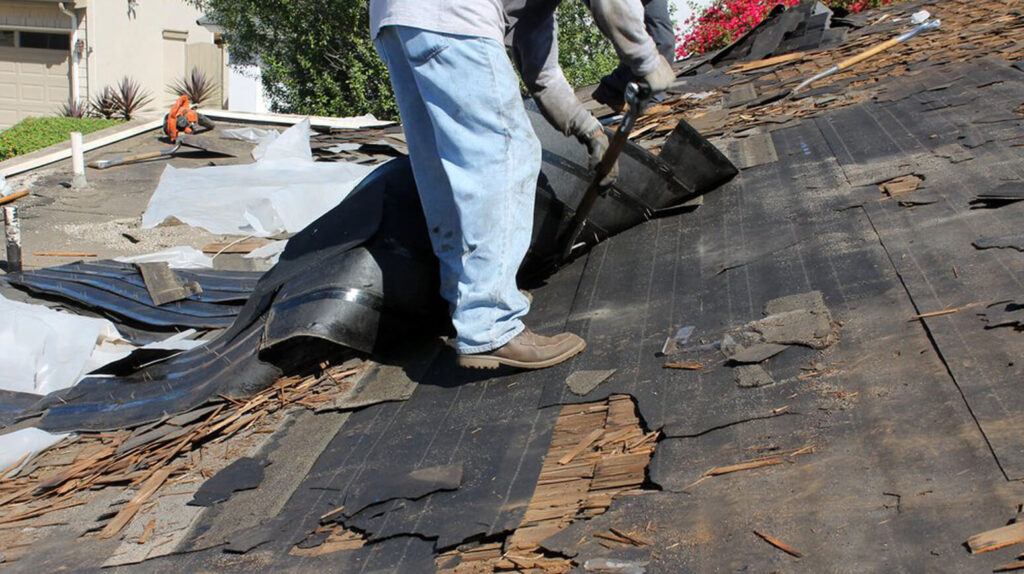
A single layer of shingles comes off fast, usually within a few hours for an average home. Two or three layers stacked on top of each other, which we still see fairly often on homes built before the 2000s in older Fayetteville and Springdale neighborhoods, adds real time. More layers mean more nails to pull, more debris to haul, and more careful work to avoid gouging the decking underneath.
Once the old material is stripped away, we inspect the decking and flashing before a single new shingle goes down. This is the step that catches people off guard. If the plywood underneath has soft spots from years of slow moisture intrusion around a chimney or valley, that plywood has to be cut out and replaced before installation continues. One or two sheets adds an hour or so. A widespread rot problem across an older roof can add a full day, sometimes more if the framing itself needs attention.
We’ve learned not to promise a firm end date until tear-off is complete and the deck has been walked. Any contractor who gives you a guaranteed finish time before that inspection is either guessing or hasn’t done many of these.
Tear-off reveals the true condition of your roof deck, and hidden damage here is the single biggest reason a “two-day job” becomes a four-day job.
How Roof Size and Pitch Change the Timeline
Square footage matters, but pitch matters just as much, and it’s the factor most homeowners underestimate.
A low-slope roof lets a crew move quickly and safely across the whole surface. Once you get into steep pitches, roughly a 9/12 or higher, crews have to rig safety equipment, move more deliberately, and can’t cover as much roof per hour. A steep, complex roof with multiple dormers, valleys, and a chimney will take noticeably longer than a simple gable roof of the same square footage, even with the same crew size.
One thing that surprises many homeowners is that a bigger, simpler roof can actually finish faster than a smaller, more complicated one. A large ranch-style roof with a gentle pitch and no valleys can move faster than a smaller two-story home with a cut-up roofline and three or four intersecting rooflines.
If you’re trying to gauge how your own roof’s pitch and layout might affect a project, our residential roofing page has more detail on what to expect for homes like yours.
Roof pitch and complexity affect the timeline more than raw square footage. A simple large roof often installs faster than a smaller, complicated one.
How Material Choice Affects Installation Time
Asphalt shingles are the fastest material to install, which is a big part of why they remain the default choice across Northwest Arkansas. A crew experienced with architectural shingles can usually complete a standard home in a day, sometimes stretching into a second day for anything above average size.
Metal roofing, particularly standing seam panels, takes longer per square foot. Panels have to be measured, cut, and fastened with more precision than shingles, and flashing details around penetrations take more care. A metal roof on an average home often runs three to five days.
Flat or low-slope roofing systems, common on additions, porches, and commercial buildings, involve a different installation method entirely, often membrane-based, and timelines vary more depending on the system chosen.
Here’s how the main options compare side by side:
| Material | Typical Install Time (Avg. Home) | Why |
|---|---|---|
| Asphalt shingles | 1–2 days | Fastest to cut, lay, and nail; most crews install this daily |
| Architectural/dimensional shingles | 1–2 days | Slightly heavier than 3-tab, similar install speed |
| Standing seam metal | 3–5 days | Panels measured and cut on site, precise flashing at every seam |
| Flat/low-slope membrane | 2–4 days | Depends on system (TPO, EPDM, modified bitumen), curing time varies |
Asphalt shingles install fastest, metal roofing takes roughly three to five days on an average home, and flat roofing timelines vary by the specific system used.
Weather and the Ozark Climate Factor
Northwest Arkansas weather does not always cooperate with a roofing schedule, and this is one of the more honest conversations we have with customers before work begins.
Humidity affects how well asphalt shingles seal to each other. Shingles rely on a heat-activated adhesive strip to bond, and that bond forms more slowly in cold or damp conditions. GAF’s own cold-weather installation guidance confirms this isn’t a workmanship issue. It’s simply physics, since the sealant needs warmth to activate properly. Installing in late fall or winter doesn’t stop a project, but it does mean the shingles take longer to fully seal after installation, and crews sometimes hand-seal tabs in colder months to compensate.
Rain is the bigger scheduling risk. A tear-off exposes your home’s interior to the weather, so a good crew won’t start stripping a roof if rain is forecast within the working window, and they’ll have the home dried in and protected before calling it a day regardless of the forecast. Spring in the Ozarks brings the most unpredictable stretch of weather, and that’s often when schedules shift by a day or two.
Humidity slows shingle sealing in cooler months, and spring rain is the most common weather-related scheduling delay in Northwest Arkansas.
When Deck Damage Adds Days
We touched on this above, but it deserves its own section because it’s the single biggest variable in any timeline estimate.
Roof decking, typically plywood or OSB, sits directly beneath your shingles and underlayment. It stays hidden for the entire life of your roof, which means damage can develop for years without any visible sign from inside the attic or outside the home. A slow leak around a chimney, vent pipe, or valley can soften the wood long before a stain ever appears on a ceiling.
When we find soft or delaminated decking during tear-off, replacing it is not optional. Installing new shingles over compromised decking creates an unstable surface that won’t hold nails properly and can shorten the life of the entire new roof. This is also the point where an honest contractor tells you the real number, rather than a vague estimate given before anyone has actually seen your roof deck.
Deck replacement, when needed, typically adds one to several hours per damaged sheet, and widespread damage can add a full extra day to the project.
What a Typical Week Looks Like
For a moderately complex roof, say a two-story home with a couple of valleys and one layer of existing shingles, a realistic week often looks like this:
- Day 1: Materials delivered, dumpster placed, tear-off begins and typically finishes by afternoon
- Day 2: Deck inspection, any damaged sheathing replaced, underlayment installed
- Day 3: Shingle installation on the main field of the roof
- Day 4: Valleys, ridge caps, and flashing details finished, since these take more precision on a cut-up roofline
- Day 5: Final cleanup, magnetic nail sweep, and walkthrough
A simpler single-story roof often compresses this into two to three days. A steep metal roof can stretch it closer to a full week.
How to Keep Your Timeline On Track
There are a few things within a homeowner’s control that genuinely help a project stay on schedule. Clearing vehicles and outdoor furniture away from the house before day one saves the crew time. Confirming HOA approval in advance, if your neighborhood requires it, avoids a stop-work delay after materials have already been delivered. And choosing in-stock materials over a special order, when the look works for your home, removes the longest variable in the entire process.
Beyond that, the timeline is mostly in the hands of the weather and what’s discovered under the old shingles, both of which a good crew will communicate honestly rather than papering over with an optimistic estimate.
Frequently Asked Questions
How long does a roof replacement take on an average NWA home?
Most standard asphalt shingle replacements take one to two days once installation begins, not counting permitting and material lead time beforehand.
Does a two-story home take longer to replace than a single-story home?
Yes, generally. Additional stories mean more safety setup, more material staging, and more time moving between sections of the roof.
How long does it take to get a roofing permit in Northwest Arkansas?
This varies by city. Some Northwest Arkansas municipalities process roofing permits within a few days, while others can take one to two weeks depending on current volume.
Can a roof be replaced in one day?
Smaller, simple roofs with a single layer of existing shingles and no deck damage can sometimes be completed in a single day, though this isn’t guaranteed until tear-off confirms the deck is sound.
Does rain delay a roof replacement?
Rain in the forecast typically delays the start of tear-off, since an open roof deck can’t be exposed to weather. Once tear-off begins, crews work to fully dry in the home before stopping for the day.
How much longer does a metal roof take compared to asphalt shingles?
Metal roofing generally takes two to three times longer than asphalt shingle installation on a comparable home, due to the precision required in panel fitting and flashing.
What happens if the crew finds rotted decking?
Damaged decking is cut out and replaced before new shingles go down. This is common on older homes and typically adds a few hours to a full day depending on how much needs replacing.
Is winter a bad time to replace a roof in Arkansas?
Winter installation is possible and common, though shingle sealing happens more slowly in cold temperatures, and crews may hand-seal certain areas to ensure a proper bond.
How far in advance should I schedule a roof replacement?
For standard materials, one to two weeks of lead time is typical. Specialty shingles, metal panels, or tile can require three to four weeks of lead time before installation.
Do I need to be home during the roof replacement?
It isn’t required, though many homeowners prefer to be present, at least for the first day, to review the material delivery and confirm the scope before work begins.
Does the cost of my roof affect how long it takes?
Not directly. Cost is driven mostly by material and roof size, while timeline is driven mostly by pitch, complexity, and what’s found during tear-off. A roof can be expensive and quick, or affordable and slower, depending on those factors. If you’re budgeting alongside your timeline, our roof replacement cost guide breaks down NWA pricing in more detail.
Getting Your Timeline Right From the Start
A roof replacement timeline is never really about a single number. It’s about size, pitch, material, weather, and what’s hiding under the old shingles once tear-off starts. The honest answer is that any contractor who gives you a firm finish date before inspecting your deck is skipping a step that matters.
If you’re planning a roof replacement in Northwest Arkansas and want a timeline based on an actual inspection of your home rather than a generic estimate, TCG Roofing can walk your roof, explain what to expect, and give you a schedule you can actually plan around. Contact us today to schedule your inspection and get a timeline built around your actual roof, not a national average.