Metal roofing pros and cons come down to a trade: long service life and strong resistance to hail penetration on one side, a higher upfront cost and some insurance fine print on the other. For most Northwest Arkansas homeowners, the deciding questions are how long you plan to stay and what your policy says about hail dents.
We hear about metal most often right after a hailstorm, when a homeowner is looking at a damaged shingle roof and wondering whether the next one should be different. The honest answer is that metal is a good roof for some homes and the wrong one for others, and the difference usually has little to do with the metal itself.
Metal Roofing Pros and Cons at a Glance
| Factor | What to know in Northwest Arkansas |
|---|---|
| Service life | Typically outlasts asphalt shingles, but read the warranty fine print |
| Hail | Panels generally resist punctures, yet dents are common and may not be covered |
| Heat | Depends on the finish color, not on the word metal |
| Upfront cost | Typically higher than shingles, and it rises faster on complex roofs |
| Insurance | Ask about cosmetic damage exclusions and the wind and hail deductible before you buy |
| Noise and repairs | Sound is usually close to shingles over solid decking, but matching a painted panel is difficult |
Pro: A Long Service Life
Metal roofing generally lasts longer than asphalt shingles, which means fewer tear-offs over the years you own a home. For an owner planning to stay a long time, that’s the strongest argument in metal’s favor, because the higher upfront price gets spread across more years.
The warranty number deserves a close read, though. The U.S. Department of Energy’s guide to cool roofs cautions that a manufacturer’s material warranty may not tell the whole story, since it usually doesn’t cover seams, where early failures can occur. On a metal roof, seams and fasteners are exactly where installation quality shows up, so ask what the warranty covers and what the installer guarantees separately. Metal warranties are often split too, with one covering the paint finish and another covering the panel itself, so ask which one a quote is describing.
Pro and Con: Hail Resistance in Northwest Arkansas
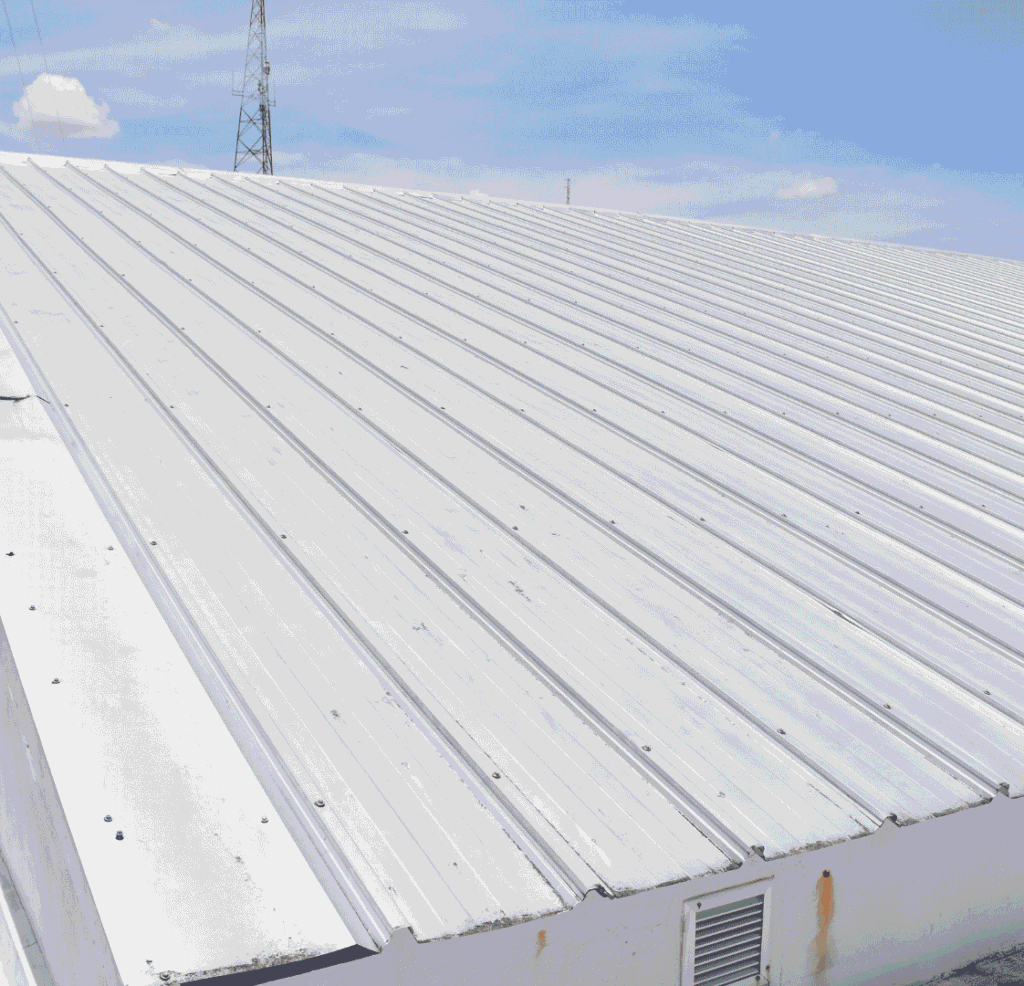
Hail is the reason many homeowners here look at metal. A metal panel is generally less likely than a shingle to crack or lose its protective surface when a stone hits it, and regulators have recognized impact-rated roof coverings. In 1998, for example, the Texas Department of Insurance ordered mandatory premium credits for metal roof coverings that meet the UL 2218 impact-resistance standard.
Here’s the catch, and it’s the one that surprises many homeowners. Hail can dent a metal panel without puncturing it, and a dented roof that still sheds water is exactly the situation some insurance policies treat as cosmetic damage. When Texas approved an optional hail endorsement in 1998, tied to a premium credit for impact-resistant roofs, it defined cosmetic damage as damage that changes a roof covering’s appearance without letting water through or stopping the roof from doing its job over time. The same endorsement said the insurer would still cover hail damage that did let water in or caused the roof to fail.
That was one state’s rule from 1998, and Arkansas policies vary by insurer. But the idea has spread. The organizations that draft standard policy forms have developed cosmetic damage endorsements that insurers can adopt, according to industry trade press, so a metal roof can end up with this kind of exclusion depending on the company. Whether yours does is something to find out before you buy a roof, not after a storm.
If hail has already hit your roof, an inspection that separates functional damage from surface dents is worth having, and it’s part of what our storm and hail damage repair work covers.
Pro and Con: Heat, Color, and Energy
Metal’s reputation as a cool roof is only partly deserved, because color and finish matter more than the metal itself. The Department of Energy’s cool roof guide says a traditional dark roof can reach 150 degrees Fahrenheit or more in summer sun, while a cool roof under the same conditions can stay more than 50 degrees cooler. Most dark roofing materials reflect 5 to 20 percent of sunlight, and light-colored materials typically reflect 55 to 90 percent.
Metal can go either way. According to the same guide, unpainted metal tends to reflect sunlight well but gives off heat poorly, while factory paint can raise both. Many painted colors can reach cool-roof performance. A conventional dark finish reflects little sunlight whether it sits on metal or on shingles. Cool-pigment dark colors reflect more, and light colors reflect the most.
Climate decides how much this is worth. The guide says cool roofs save the most cooling energy in hot climates, zones 1 through 3. In colder climates they can raise energy costs, because a home loses some winter heat gain, though cooling savings are usually larger than the heating penalty. Northwest Arkansas sits in climate zone 4A, according to the Department of Energy’s climate zone map, which suggests a real but modest benefit rather than a dramatic one. The guide is also blunt that a reflective roof is never a substitute for enough insulation.
Con: Higher Upfront Cost
Metal typically costs more than asphalt shingles to install, and the gap isn’t a fixed number. It depends on the type of metal panel and the shape of the roof. Complex roofs with many valleys and penetrations raise the price faster in metal than in shingles, because every transition needs careful flashing. A simple gable roof is the friendliest shape for metal.
For a ballpark, our comparison guide puts a standard home at roughly $19,000 to $32,000 installed, depending on the metal system. Your quote will depend on your roof, so treat that as a starting point. When you compare quotes, ask for the panel type and coating in writing. Then ask what the quote includes for tear-off and underlayment, and how flashing will be handled at valleys and penetrations.
Con: Noise, Repairs, and Color Matching
Rain on metal can sound louder than rain on shingles, but systems installed over solid decking with underlayment usually dampen the sound to something close to shingles. Many owners never notice a difference, and if it matters to you, ask to hear a metal roof in the rain before you commit.
Metal also expands and contracts with temperature swings, so how the panels are attached and how the fasteners are handled matters for the life of the roof. Repairs have their own wrinkle. A painted panel that has weathered for years rarely matches a new one exactly, the same problem any coated surface has.
Standing Seam vs. Stone-Coated Steel
Two metal styles come up most often with homeowners here. Standing seam panels run the length of the roof and join at raised seams that hide the fasteners, which gives a clean, modern look. Stone-coated steel is formed into panels or shingle-shaped pieces and finished with a granule surface, so it can resemble shingles or tile more closely. The Department of Energy’s cool roof guide notes that metal roofs come with painted or granule-coated finishes, and the finish affects how much sunlight the roof reflects.
Neither one is automatically better. Appearance and budget usually decide it, so ask your contractor why they favor one for your roof.
Is Metal Roofing Right for Your Home?
More often than not, the answer comes down to how long you’ll own the home and how your insurer treats hail dents. Metal tends to make sense for owners who plan to stay many years and have a fairly simple roof. It makes the most sense of all when they’ve already confirmed what their policy says about cosmetic hail damage.
Asphalt shingles tend to fit better when you might sell within a few years or when the roof has many valleys and dormers. Impact-resistant shingles are a middle path for some homes. If you’re weighing metal against shingles or a flat roof system, our asphalt vs. metal vs. flat TPO roofing comparison lays out the options side by side.
Questions to Ask Your Insurer Before You Choose Metal
A short call to your agent can save an expensive surprise, and Arkansas has changed some roof-claim rules in recent years. In November 2023, the Arkansas Insurance Department issued Bulletin 17-2023, which allows insurers to apply a mandatory separate wind and hail deductible. It also allows a mandatory roof schedule endorsement for roofs seven years or older, with notice to the policyholder. Those terms can change what a hail payout looks like on any roof material, metal included.
Ask whether your policy has a separate wind and hail deductible, and what it comes to in dollars. Ask whether the roof is covered at replacement cost or actual cash value, and whether a roof schedule endorsement applies once the roof reaches a certain age. Then ask whether the policy includes a cosmetic damage exclusion or any limit on roof surfacing for hail. Last, ask whether the insurer offers a premium credit for an impact-rated roof, since some states have required them.
Get the answers in writing if you can. A roof replacement is a large purchase, and the policy language is what an adjuster will apply after a storm, whatever the contractor expected.
Frequently Asked Questions
Is metal roofing worth it in Northwest Arkansas?
It can be, especially for owners who plan to stay many years and have a fairly simple roof. The answer also depends on what your insurance policy says about hail dents, so check that before you decide.
Can hail damage a metal roof without causing a leak?
Yes. Hail can dent panels without letting water in, and a roof that still sheds water may be treated as having cosmetic damage only. Whether that damage is covered depends on your policy, so read its endorsements.
Will insurance pay for a dented metal roof?
It depends on the policy. Some cover hail damage that lets water in or makes the roof fail, while others exclude purely cosmetic dents. Read the endorsements on your policy or ask your agent directly.
What is a cosmetic damage exclusion?
It’s a policy provision that excludes damage changing a roof’s appearance without letting water in or stopping it from doing its job. Texas approved a version of this endorsement in 1998, and wording varies by insurer.
Will a metal roof lower my cooling bills?
It can, but the finish color and your attic insulation matter more than the metal itself. The Department of Energy says reflective roofs save the most in hot climates, so expect a modest benefit in Northwest Arkansas.
Is a metal roof louder in the rain?
It can be, but systems installed over solid decking with underlayment usually come close to shingles. It’s worth hearing one in the rain before you commit.
What’s the difference between standing seam and stone-coated steel?
Standing seam panels join at raised seams that hide the fasteners. Stone-coated steel has a granule surface and can look more like shingles or tile.
How long does a metal roof last?
Generally longer than asphalt shingles, though the real number depends on the material and finish as well as the installation quality. Read the warranty closely to see what it covers, including seams.
Is metal a good fit for a roof with a lot of valleys and dormers?
It can be done, but complex roofs cost more in metal because each transition needs careful flashing. Simple roof shapes suit metal best.
What should I ask my insurer before choosing metal?
Ask about the wind and hail deductible and whether a roof schedule endorsement applies to your roof’s age. Also ask whether the policy has a cosmetic damage exclusion.
Is Metal Roofing Right for Your Northwest Arkansas Home?
Metal roofing pros and cons come down to long service life and strong hail penetration resistance against a higher upfront cost and a real insurance question. The heat benefit depends on the finish you choose, and in Northwest Arkansas it’s likely to be modest. For the right home and the right policy, metal is a solid long-term roof.
If you’re planning residential roof replacement and want to talk through whether metal makes sense for your roof, contact TCG Roofing and we’ll take a look.