
Fascia & Soffit Repair in Northwest Arkansas

Fascia & Soffit Repair in Northwest Arkansas

Most homeowners do not spend much time thinking about fascia and soffit. They are not the most visible or dramatic parts of a home’s exterior. But they are among the most consequential when they fail, and they fail quietly in NWA in ways that create problems in the roof framing, the gutter system, the attic, and the wall system before anything obvious shows up from the ground.

TCG Roofing repairs and replaces fascia and soffit for homes across Northwest Arkansas, addressing both the visible damage and the underlying causes that made the damage possible in the first place. We handle wood, aluminum, and vinyl fascia and soffit systems, coordinate with gutter replacement when needed, and restore the roofline components that protect everything above and below them.

Call (479) 283-8154 or request a free inspection below.

What Fascia and Soffit Actually Do

Before understanding why these components matter, it helps to know exactly what they are and what they are doing.

Fascia

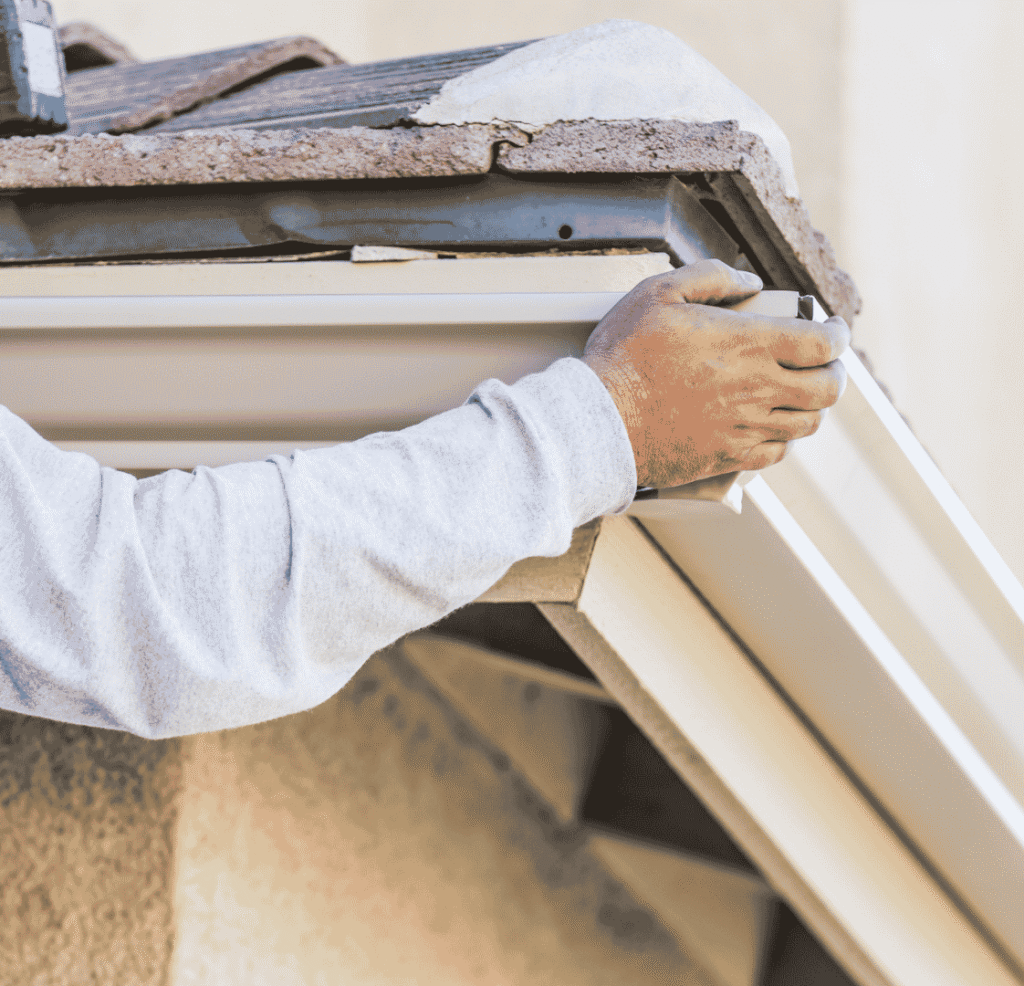
The vertical board running along the lower edge of the roofline, facing outward. It's what your gutters attach to and it covers the rafter ends where they meet the wall, sealing the gap between the roof edge and the wall below and keeping water and pests out from the side.

Soffit

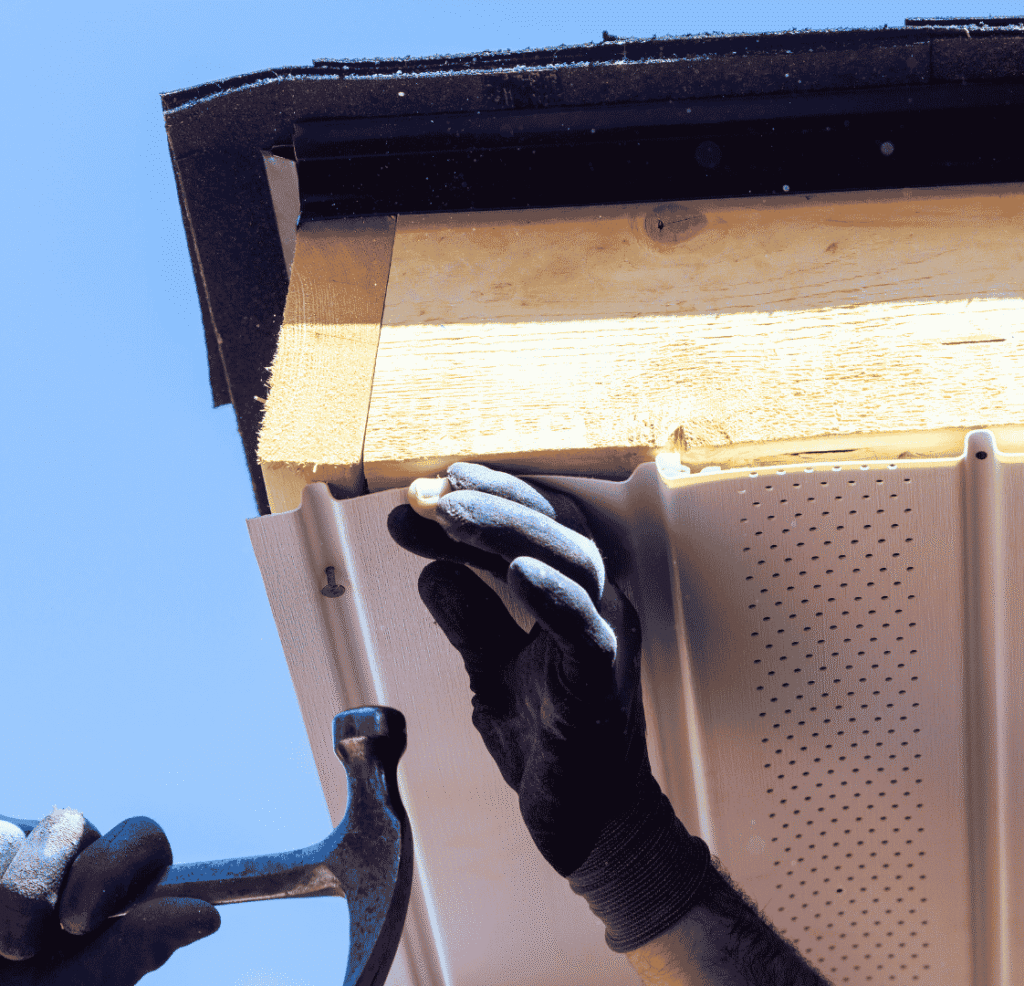
The material covering the underside of the roof overhang, the horizontal surface you see looking up under the eave. Soffit panels typically have perforations or vents that let outside air flow into the attic, ventilation that's critical for managing temperature and moisture through NWA's seasons.

Together, fascia and soffit form the complete roofline assembly that seals the roof system from weather and pest intrusion while maintaining the attic ventilation that prevents moisture buildup and premature roof system degradation.

How Fascia and Soffit Fail in NWA

NWA’s climate creates specific conditions that accelerate fascia and soffit deterioration in ways that are not always obvious from the ground.

Cause
What Happens
Gutter overflow
The most common cause of fascia failure in NWA. When gutters clog with pine needles and leaf fall, water runs directly down the face of the fascia on every rainfall, saturating wood, breaking down the paint system, and initiating rot that works inward toward the roof framing.
Ice damming
NWA's winters are mild but see enough freeze-thaw cycles to create ice buildup at the roof edge. That ice works under the roofing material and behind the fascia, pushing water into the roofline assembly at its most vulnerable points.
Pest intrusion
NWA's wooded neighborhoods bring squirrels, birds, and carpenter bees seeking attic entry. Any gap or deteriorated joint in the soffit is a potential entry point, and the resulting damage to insulation and wiring costs far more than the repair that would have kept them out.
Reduced ventilation
Deteriorated, blocked, or damaged soffit panels compromise attic airflow. In NWA's hot summers, that allows heat to build up in the attic, accelerating shingle degradation, raising cooling costs, and creating moisture conditions that lead to structural problems over time.
Storm damage
Hail dents and cracks aluminum and vinyl components and separates panel joints. High wind can tear soffit panels away entirely, exposing the attic directly to weather. Both are covered losses under most NWA homeowners policies.

Fascia and Soffit Materials

Wood Fascia and Soffit

Older NWA homes typically have wood fascia and soffit, and many newer builds continue to use wood for the fascia board. Wood offers good structural properties for the fascia's gutter-attachment function but is the most vulnerable material to moisture damage in NWA's climate. When wood fascia fails it typically requires full replacement of the affected sections rather than surface repair. Replacement wood should be primed on all six faces before installation and painted with a quality exterior paint system to maximize lifespan.

Aluminum Fascia and Soffit

Aluminum fascia capping and soffit panels are the most common upgrade from wood fascia on NWA homes. Aluminum does not rot, does not absorb moisture, and requires minimal maintenance once properly installed. Aluminum soffit panels are available in vented and non-vented profiles and can be matched to a wide range of fascia and trim colors. For homes with deteriorated wood fascia, aluminum capping that wraps the existing fascia board is sometimes an option when the underlying wood is sound enough to serve as a substrate.

Vinyl Soffit

Vinyl soffit panels are a cost-effective and durable option for the soffit area. They are available in vented profiles that maintain attic airflow, resistant to the moisture and pest conditions NWA homes face, and require essentially no maintenance once installed. Vinyl soffit is a strong choice for re-soffit projects where the goal is to upgrade from deteriorated wood to a low-maintenance system.

When Fascia Damage Means You Cannot Install New Gutters Yet

This connection is one of the most important things TCG communicates to NWA homeowners and one that most gutter installers do not mention.

New gutters attach to the fascia. If the fascia is soft, rotted, or structurally compromised, new gutters will pull away from the house within a season regardless of how well they are installed. The screws will not hold in deteriorated wood. The gutter system will begin to sag and separate from the house at the very points where it needs to be most secure.

Before TCG installs new gutters on any home, we assess the fascia condition. If the fascia needs repair or replacement, we address that first and install the gutters to a sound substrate. This adds to the project scope and cost, but it is what makes the gutter installation last. Installing gutters over bad fascia is not a service TCG provides because it is not work we can stand behind.

Why NWA Homeowners Choose TCG for Fascia and Soffit Repair

Iron Shield Roofing & Restoration

We fix the cause, not the symptom

If gutter overflow caused the fascia rot, we address the gutter system as part of the project. If pest intrusion damaged the soffit, we identify the entry points and seal them. A repair that ignores the cause is only temporary.
Iron Shield Roofing & Restoration

Gutters and fascia, one project

Most fascia damage traces back to gutter problems. TCG handles both together, so the gutter system attaches to sound fascia and the fascia stays protected by a properly functioning gutter system from day one.

Iron Shield Roofing & Restoration

We restore attic ventilation, not just cover damage

If soffit damage has compromised attic airflow, we verify the replacement system restores proper ventilation, rather than simply patching over the damaged area and calling it done.

Iron Shield Roofing & Restoration

We match materials to the existing system

Replacement fascia and soffit are matched to your home's existing profile and finish where possible, so the repair reads as part of the house rather than a visible patch.

Iron Shield Roofing & Restoration

Licensed, insured, and guaranteed

Fully licensed and insured with a workmanship guarantee on all fascia and soffit work, so you have real backing behind the repair long after the crew leaves.

Iron Shield Roofing & Restoration

Locally owned and based in Springdale

We work in NWA year round and understand exactly what this climate does to roofline components over time, and we're still here when you need warranty work honored.

Serving Northwest Arkansas and Surrounding Areas

Bella Vista Bentonville Centerton Farmington Fayetteville Lowell Rogers Siloam Springs Springdale Tontitown

We also serve parts of Oklahoma and Missouri. Not sure if we cover your area? Call us at (479) 283-8154 and chances are, we do.

Iron Shield Roofing & Restoration

Have Any Questions or Need more info?

Don’t Hesitate To Contact Us Any Time.
Frequently Asked Questions

How do I know if my fascia is rotting?

Soft spots when you press on the fascia surface, paint that is peeling or bubbling, visible discoloration or dark staining, and gutters that are pulling away from the house are all signs of fascia deterioration. From the ground you can often see discoloration and gutter separation. A close inspection from a ladder or by a professional reveals the actual extent of the damage.

It depends on how far the rot has progressed and how many linear feet are affected. Isolated rot in a small section can sometimes be repaired with epoxy wood filler if the surrounding wood is sound. Rot that has progressed through the full thickness of the board or spread across a significant length of the run requires replacement. TCG assesses each situation and recommends the most cost-effective approach that results in a lasting repair.

Yes, if the damage was caused by a covered storm event such as hail or high wind. TCG documents all storm-related fascia and soffit damage with photographs and a written assessment as part of the full exterior damage documentation for your insurance claim.

Vented soffit panels have perforations or channels that allow outside air to enter the attic space, which is essential for the air circulation that prevents heat and moisture buildup. Non-vented soffit provides no airflow. Most NWA homes require vented soffit to maintain adequate attic ventilation, and replacing existing vented soffit with non-vented panels reduces attic airflow in ways that can accelerate roof system degradation. TCG uses the correct panel type for each application.

Wood fascia on NWA homes typically needs attention every 15 to 25 years depending on gutter maintenance, paint system quality, and whether the gutters have been properly functioning to keep water off the fascia. Aluminum-capped or vinyl fascia systems last significantly longer with minimal maintenance. Regular gutter cleaning and maintenance is the single most effective way to extend fascia life.

Fascia & Soffit Repair in Northwest Arkansas

Ready to get started on your roofing project?

Get Your Free Fascia and Soffit Inspection

TCG Roofing gives you an honest, no-pressure assessment of exactly what’s happening at your roofline and what it will take to fix.

Call (479) 283-8154 or fill out the form below to schedule your free inspection today.