If you’ve called around asking which roofing material to choose, you’ve probably noticed everyone has an opinion, and it usually matches whatever they install most. That’s not a knock on any of them. It’s just human nature. The honest answer depends on your roof’s slope, your budget, and how much weather you’re actually trying to armor against, and in Northwest Arkansas, that last part matters more than most homeowners realize.
We install asphalt shingle, metal, and flat/TPO roofing systems across Bentonville, Fayetteville, Rogers, and Springdale as TCG Roofing, part of Torres Construction Group. This guide breaks down what actually separates these three roofing types when you’re building or replacing a roof in a region that sees 45 to 50 thunderstorm days a year and hail-producing storms nearly every spring, not the generic national comparison you’ll find on most roofing sites.
How We Walk Property Owners Through This Decision
Here’s the thing: most people start this conversation with a material already in mind, usually asphalt, because it’s what’s already on the roof. That’s a reasonable starting point, but it’s not actually the first thing we evaluate.
The first real question is roof slope. A steep pitched roof and a flat or low-slope roof aren’t competing for the same materials. Asphalt and most metal systems need enough pitch to shed water; flat and low-slope sections, common on additions, porches, and commercial buildings, need a membrane system like TPO instead. The second question is how long you plan to own the property, since a 20-year shingle roof and a 50-year metal roof solve very different problems depending on your timeline. Budget and storm exposure round out the conversation after that.
Skipping straight to “which material is best” without answering those first two questions is how homeowners end up comparing options that were never actually competing for their roof in the first place. If you’re not even sure your existing roof needs full replacement yet, that’s exactly the kind of question we walk through as part of our residential roofing evaluations, before you get this far into the material conversation.
Asphalt Shingles: The Standard for NWA Homes
Asphalt shingles are still what we install most often on pitched residential roofs across the region, and there’s a straightforward reason for that. They cover the widest range of budgets, from three-tab through architectural and premium designer lines, and every reputable manufacturer now makes an impact-resistant Class 4 option built specifically for hail-prone regions like ours.
That Class 4 detail matters more here than it does almost anywhere else in the country. The pattern we see most often after a storm is granule loss and bruising on standard shingles that a Class 4 product would have shrugged off. Some insurers in Arkansas offer premium discounts for Class 4 roofs too, which is worth asking your agent about directly.
The tradeoff with asphalt is lifespan and storm exposure. Standard architectural shingles run 20 to 25 years here, shorter than the national average because summer heat bakes the asphalt and spring hail accelerates wear. Exact pricing varies quite a bit by product line and roof complexity, which the cost breakdown below accounts for.
Asphalt shingles typically run $9,800 to $17,500 installed depending on the tier you choose, hold up reasonably well against wind up to about 110 mph on architectural grades, and remain the most budget-friendly option upfront, but they need replacement roughly every 20 to 25 years in this climate and take more direct damage from hail than metal does. Recent Class 4 shingle installs are worth a look on our [residential roofing] page.
Metal Roofing: Built for Wind and Longevity
Metal roofing, whether standing seam panels or stone-coated steel, is the material we recommend most often to homeowners planning to stay in a property long-term or anyone tired of dealing with storm damage every few years.
The wind and hail performance is the real story here. Standing seam metal typically holds up to 140 mph winds or more, and while hail can dent metal cosmetically, it rarely compromises the roof’s actual waterproofing the way it can with asphalt granule loss. That distinction between cosmetic and functional damage is one insurers and homeowners both need to understand before filing a claim, since a dented metal roof that’s still fully watertight is a very different conversation with your insurance company than a leaking one.
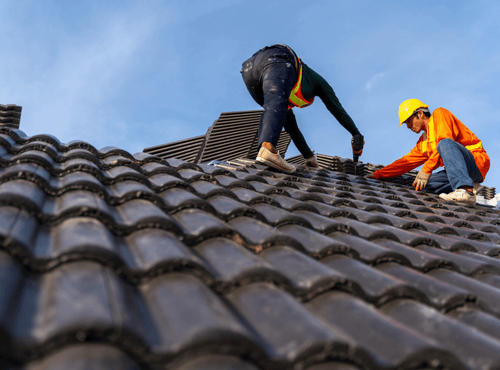
One thing that surprises many property owners: metal roofing isn’t necessarily the loud, noisy roof people remember from old pole barns. Modern systems are installed over solid decking with underlayment, which dampens sound close to what you’d get with asphalt.
Metal roofing typically runs $19,000 to $32,000 installed for a standard home, depending on whether you choose standing seam or stone-coated steel, and structurally lasts 40 to 70 years, roughly double to triple what asphalt offers, but the upfront cost is meaningfully higher and not every budget or short-term ownership plan makes that investment pencil out.
Flat and TPO Roofing: Built for Low-Slope and Commercial Applications
Flat and low-slope sections, whether on a home addition, a porch, or a full commercial building, aren’t good candidates for shingles or most metal panel systems at all. That’s where TPO, along with related membrane systems like PVC and EPDM, comes in.
TPO is a single-ply membrane heat-welded at the seams, which gives it a genuinely watertight, monolithic surface when installed correctly. It’s also reflective, which helps with cooling costs on commercial buildings with large flat roof areas, something that matters quite a bit during our summer heat.
The real vulnerability with any flat membrane system is drainage, not wind or hail directly. Ponding water on a poorly sloped or aging membrane is where failures start, which is why proper installation and slope planning matter more on TPO than the material choice itself does. We handle this regularly as part of our commercial roofing work, where flat and low-slope sections are the norm rather than the exception.
TPO and similar membrane systems typically run $8,000 to $20,000 installed for a 2,000-square-foot flat roof section, last 10 to 25 years depending on membrane thickness and quality, and handle heat and UV exposure well, but they depend heavily on correct installation and drainage planning to avoid the ponding issues that shorten their lifespan.
Cost Comparison: What NWA Property Owners Actually Pay
| Asphalt Shingle | Metal | Flat/TPO | |
|---|---|---|---|
| Typical installed cost, NWA | $9,800-$17,500 | $19,000-$32,000 | $8,000-$20,000* |
| Structural lifespan | 20-25 years | 40-70 years | 10-25 years |
| Wind resistance | Up to ~110 mph | 140 mph or more | Moderate, depends on installation |
| Hail resistance | Good with Class 4 | Very good, cosmetic risk only | Moderate |
| Best suited for | Pitched residential roofs | Long-term ownership, storm-prone properties | Low-slope, flat, and commercial roofs |
*TPO figures reflect national average installed-cost data; final NWA pricing depends on roof size, slope, and drainage requirements. A site visit gives an exact number.
Upfront price only tells part of the story here too. Over a 30-year ownership window, metal’s higher entry cost is offset by needing zero full replacements where asphalt typically needs one, sometimes two. Asphalt remains the lowest barrier to entry and makes sense for shorter ownership horizons or tighter budgets.
Installation Timeline by Material
Asphalt shingle replacements are typically the fastest of the three, often completed in one to three days for an average home, weather permitting. Metal roofing installs usually take longer, generally one to two weeks, since panel fabrication and seaming require more precision. TPO installation timelines vary more by roof size and complexity but often run three days to two weeks for standard commercial sections. Weather delays and decking condition affect all three material types similarly, and it’s exactly the kind of detail we walk through during a free inspection before scheduling a start date.
Hail and Wind Performance: Why This Matters More in Northwest Arkansas
The truth is, most roofing comparison articles treat hail and wind resistance as a minor bullet point. Here, it’s close to the deciding factor for a lot of our customers, and for good reason.
Northwest Arkansas sits in an active severe weather corridor. Spring hail events are common, and straight-line winds over 60 mph aren’t rare during storm season. That combination is exactly what the Insurance Institute for Business and Home Safety’s roofing research is built around: identifying which roofing assemblies actually hold up under real hail and wind loads rather than just meeting minimum code.
Class 4 impact-resistant shingles absorb hail impact through a rubberized layer rather than cracking or losing granules outright, which is the single best upgrade available for asphalt roofs in our region. Metal takes hail impact differently. It dents rather than breaks, which is a cosmetic issue in nearly every case rather than a functional one, though repeated significant hail events over decades can eventually affect appearance enough that some owners choose to address it. TPO’s main wind vulnerability isn’t the membrane itself but the edge detailing and fastening pattern, which is why installation quality matters more for wind performance on flat roofs than material choice alone does.
Insurance Considerations by Roofing Material
Believe it or not, your roofing material can affect both your premium and how smoothly a storm claim goes. Several Arkansas insurers offer discounts for Class 4 impact-resistant shingles and for metal roofing, since both reduce the insurer’s payout risk in hail-prone regions like ours. The rules around depreciation and matching coverage catch a lot of homeowners off guard, which is exactly what we help walk through as part of our residential roofing storm damage consultations.
More often than not, the claims conversation gets complicated on cosmetic-only damage, particularly with metal roofs that dented but never leaked. Documenting the roof’s condition before and immediately after a storm, ideally with a professional inspection, makes that conversation considerably easier regardless of which material is on your roof.
Energy Efficiency and Cooling Costs by Material
Summer heat in Northwest Arkansas is genuinely hard on a roof, and it affects cooling costs more than most homeowners factor in upfront. Metal roofing reflects a meaningfully higher percentage of solar radiation than asphalt, which can measurably reduce attic temperatures and, by extension, air conditioning load during peak summer months. TPO’s white or light-colored membrane options perform similarly well on flat commercial roofs, which is part of why they’re standard on large retail and warehouse buildings. Asphalt shingles absorb more heat by comparison, though lighter shingle colors and proper attic ventilation narrow that gap considerably.
Warranty Considerations Property Owners Often Overlook
If there’s one lesson we’ve learned quoting all three roofing types side by side, it’s that warranty terms vary as much by manufacturer and installer as they do by material. Asphalt shingle manufacturers typically offer 25 to 50-year limited warranties on materials, with workmanship warranties set separately by the installing contractor, which is worth confirming in writing. Metal roofing often carries 30 to 50-year finish warranties covering paint and coating performance, separate from the structural panel warranty itself. TPO membrane systems commonly carry 15 to 20-year manufacturer warranties, with membrane thickness and installation quality both affecting what’s actually covered.
Ask specifically what voids coverage on any of these. Improper installation, unauthorized repairs, and certain types of storm damage are common exclusions across all three material types.
Maintenance Reality Check
- Asphalt: Periodic inspection for granule loss, cracked or lifted shingles, and flashing issues around penetrations. Watch for granule buildup in gutters, which usually signals the shingles are aging past their effective lifespan.
- Metal: Lowest routine maintenance of the three. Watch for scratched or worn finish coating near fastener points, since that’s typically where corrosion starts first if it’s going to happen at all.
- Flat/TPO: Requires the most consistent attention of the three, mainly checking drains and seams for ponding or separation after major storms. Catching a small seam issue early is far cheaper than addressing water intrusion into the decking later.
More often than not, we find that maintenance discipline matters more than material choice for how long a roof actually lasts in practice. A well-maintained asphalt roof can outperform a neglected metal or TPO system, even though the underlying materials suggest otherwise.
A Decision Framework: Matching Roofing Material to Your Property
At first glance, this can feel like it comes down to budget alone, but a few questions tend to sort most Northwest Arkansas property owners into the right category quickly:
- Is the roof section pitched or flat/low-slope? Flat and low-slope sections need TPO or a similar membrane system regardless of budget, since shingles and most metal panels aren’t viable options there.
- Are you planning to own the property 20-plus years? Metal’s higher upfront cost typically pencils out over that horizon, especially given the storm exposure here.
- Is upfront budget the primary constraint? Asphalt, particularly Class 4 architectural shingles, offers the best balance of cost and hail resistance for most residential roofs.
- Are you roofing a commercial building with large flat sections? TPO is almost always the practical choice, and it’s the bulk of our commercial roofing work across the region.
- Have you filed multiple hail claims on the same roof in recent years? That’s usually the point where switching to metal starts to make long-term financial sense over continuing to repair or replace asphalt.
What We Look At During a Roof Consultation
When we get up on a roof for the first time, the material conversation usually narrows down fast, not because we’re steering anyone toward a particular product, but because the roof itself rules a few things out immediately. We’re checking slope and drainage, decking condition underneath the existing material, how many roofing layers are already there, and what the structure can support if a heavier material like metal or stone-coated steel is on the table.
We see this quite often: a homeowner calls wanting metal specifically after a rough hail season, and the inspection confirms it’s a solid long-term move given their storm history. We’ve also had customers assume they need a full metal upgrade when a Class 4 architectural shingle roof would have covered everything they were actually worried about at a fraction of the cost. Neither outcome is us pushing a particular material.
Frequently Asked Questions
Which roofing material lasts the longest in Northwest Arkansas? Metal roofing typically lasts 40 to 70 years structurally, roughly double to triple asphalt’s 20 to 25-year lifespan in this climate. TPO and similar flat membrane systems generally last 10 to 25 years, with thicker, higher-quality membranes landing at the top of that range.
Is asphalt or TPO cheaper to install? Asphalt shingles typically have a lower starting cost for pitched residential roofs, while TPO applies specifically to flat or low-slope sections, so the two usually aren’t competing for the same roof. A site-specific quote is the only way to get an accurate number for your property.
Do metal roofs actually get damaged by hail? Hail typically dents metal roofing cosmetically rather than compromising its waterproofing, which is a meaningfully different outcome than the granule loss and cracking that can happen to standard asphalt shingles in the same storm.
How many hours of maintenance does each roofing material actually need? Metal requires the least routine maintenance of the three. Asphalt needs periodic inspection for granule loss and flashing issues. TPO needs the most consistent attention, mainly checking drains and seams for ponding after major storms.
Do Class 4 impact-resistant shingles really make a difference in hail-prone regions? Yes. Class 4 shingles absorb hail impact through a rubberized layer rather than cracking or losing granules, which is the most effective upgrade available for asphalt roofs in storm-prone regions like Northwest Arkansas, and some insurers offer premium discounts for installing them.
How does Northwest Arkansas’s hail and wind exposure affect material choice? Frequent spring hail and wind gusts over 60 mph make impact and wind resistance a bigger factor here than in milder climates. Metal handles both best structurally, Class 4 asphalt shingles offer strong hail resistance at a lower cost, and TPO’s main vulnerability is edge and seam detailing rather than the membrane itself.
Which roofing material holds up best for resale value? Metal roofing generally carries the strongest resale impact given its long lifespan and low maintenance reputation. Asphalt remains the market standard and is well understood by buyers. TPO’s value impact is mostly relevant on commercial or mixed-use properties rather than typical single-family resale.
Can a flat roof be converted to a pitched, shingled roof later? In some cases, yes, though it depends on the existing structure, roofline, and framing. This is evaluated case by case as part of a roof consultation, since it’s a significant structural project rather than a standard replacement.
What warranty should I expect with each roofing material? Expect a long-term manufacturer material warranty on all three, typically 25 to 50 years for asphalt, 30 to 50 years for metal finish coatings, and 15 to 20 years for TPO membranes, with a separate workmanship warranty from the installing contractor. Ask specifically what voids coverage, since improper installation and certain storm damage are common exclusions across all three.
Does roofing material affect my homeowners insurance premium? In many cases, yes. Several Arkansas insurers offer discounts for Class 4 impact-resistant shingles and metal roofing, since both reduce claim risk in hail-prone regions. Ask your insurance agent directly, since discounts and requirements vary by carrier.
Choosing the Right Roof Material for Your Northwest Arkansas Property
None of these three roofing materials is the universally right answer. Each one solves a different combination of roof structure, ownership timeline, and storm exposure, and the property itself usually narrows the choice faster than any pricing chart can. What we’d recommend before making a final decision is the same thing we recommend to every property owner we inspect a roof for: get a professional evaluation before committing to a material, because what your roof structure and storm history actually call for matters more than what looks best in a brochure.
TCG Roofing has installed and repaired asphalt shingle, metal, and flat/TPO roofing systems across Bentonville, Fayetteville, Rogers, Springdale, and the surrounding Northwest Arkansas communities as part of Torres Construction Group. If you’d like a straight, site-specific read on which roofing material fits your property, call us at (479) 283-8154 or request a free inspection online.