Most homeowners who call us aren’t asking about ridge vents or ice dam protection. They want one number: what’s this going to cost me. Fair question, and one we can actually answer honestly instead of the “it depends” runaround a lot of contractors hide behind.
Here’s the short version. In Northwest Arkansas in 2026, a full asphalt shingle roof replacement on an average home runs between $8,500 and $16,500, with most jobs landing around $10,500 to $13,500. That’s a touch above statewide Arkansas averages, and there’s a real reason for it. NWA sits in one of the more storm-active corners of the state, and roofing demand here has stayed high enough that contractors don’t need to discount to stay busy. Metal roofing typically starts around $17,000 and climbs past $30,000 depending on the system.
We’ve walked hundreds of NWA homeowners through this exact conversation, on rooftops from Bentonville to Siloam Springs, and the questions never really change. What changes is the roof underneath them.
Why NWA Roofing Costs More Than Statewide Averages
This is the part most cost guides skip entirely. Arkansas as a whole averages somewhere around $8,000 to $13,000 for a standard architectural shingle replacement. Northwest Arkansas typically runs 5 to 10 percent above that baseline, and it isn’t because materials cost more to ship here.
Two things drive it. First, this region gets hit with roughly 45 to 50 thunderstorm days a year, many producing hail and winds over 60 mph, which means roofing crews are almost always working through a backlog of storm damage rather than sitting idle waiting for slower-paced replacement jobs. Second, population growth across Bentonville, Rogers, and Fayetteville has kept demand for licensed, insured crews high enough that pricing doesn’t soften the way it might in a slower market.
None of that means you’re being overcharged. It means the math is different here than it is in Little Rock or Fort Smith, and a quote that seems high compared to a national cost calculator usually just reflects local reality.
What Determines Your Roof Replacement Cost
Your final quote depends on a handful of factors, and most of them are unrelated to the shingle brand shown in the brochure.
Roof size and pitch matter first. Roofing is priced by the square, which is industry shorthand for 100 square feet. A 1,800 square foot footprint isn’t 1,800 square feet of actual shingles once pitch is factored in. A steep 10/12 or 12/12 roof has noticeably more surface area than a low-slope 4/12 and takes longer to work safely. We’ve quoted two homes with nearly identical footprints where one job ran 30 percent higher purely because of steepness and the number of valleys cutting through the roofline.
Layers matter too. One layer of old shingles means a clean tear-off. Two layers, which shows up constantly on homes built in the 90s that were already re-roofed once, means more dump fees, more labor hours, and a mandatory full deck inspection since we’re seeing wood that hasn’t been exposed to daylight in decades.
Decking condition is the one nobody budgets for and the one that matters most. Once the old shingles come off, we’re looking at bare plywood or OSB decking for the first time. Soft spots, water staining, or rot around chimneys and valleys need replacing before a single new shingle goes down. Most jobs need little to no decking work. Some need a lot. You won’t know for certain until tear-off day, which is why any contractor promising an exact final number before removing your old roof is guessing.
Material choice shapes the range considerably. Architectural shingles have mostly replaced the old 3-tab style across NWA, largely because they hold up better against the wind and hail this region sees every spring. GAF Timberline HDZ, Owens Corning Duration, and CertainTeed Landmark are the three lines we install most often, and all three now offer wind ratings up to 130 mph, which matters more here than in calmer climates.
Ventilation and flashing round it out. Ridge vents, soffit vents, and new flashing around chimneys, skylights, and plumbing stacks aren’t optional add-ons meant to pad an invoice. Poor ventilation is one of the fastest ways to void a shingle warranty and shorten the life of an otherwise good roof.
Labor, not materials, usually makes up 60 percent or more of the total invoice. The shingles themselves are a relatively small line item. You’re mostly paying for crew time, safety equipment, and the judgment to catch decking problems before they become your problem again in five years.
2026 Roof Replacement Costs by Material (NWA Estimates)
| Material | Cost per Square Foot | Typical Total (1,800–2,200 sq ft home) |
|---|---|---|
| 3-tab asphalt shingles | $3.75–$5.00 | $8,000–$10,500 |
| Architectural asphalt shingles | $4.50–$6.25 | $9,800–$14,000 |
| Premium/designer shingles | $6.00–$8.00 | $13,000–$17,500 |
| Standing seam metal | $9.50–$14.50 | $19,000–$29,000 |
| Stone-coated steel | $10.50–$16.00 | $21,000–$32,000 |
Every number here reflects our real local pricing patterns, and every roof is different once we’re standing on it. Treat this table as a starting point for budgeting, not a quote.
Repair or Replace? How We Actually Decide
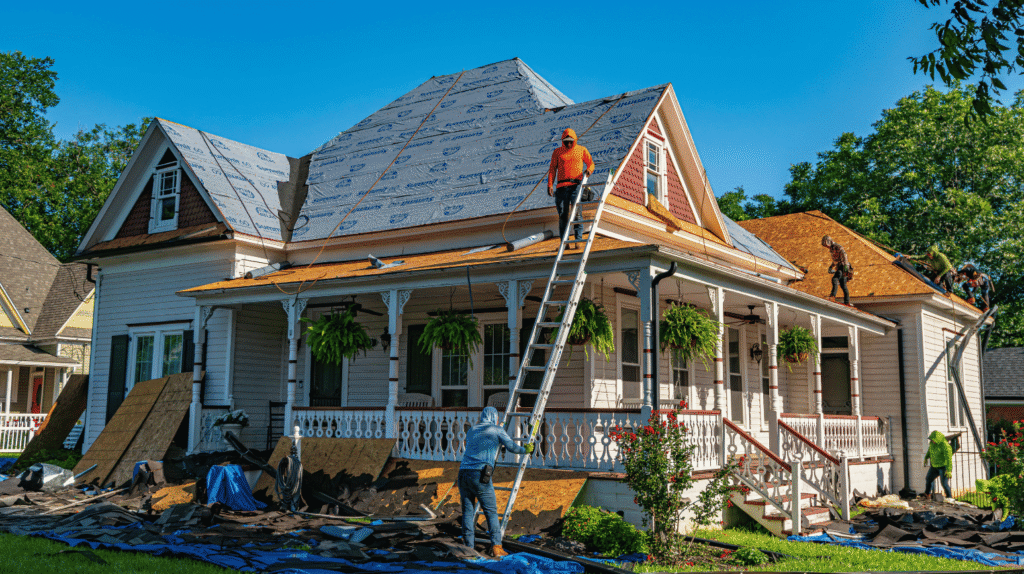
We get asked this constantly, and there’s rarely one correct answer. Here’s how we actually walk through it on an inspection.
If less than 20 percent of the roof is damaged, the shingles are under 10 years old, and the decking underneath is solid, repair almost always makes more financial sense. We’ll match shingles as closely as possible and seal up the affected area.
If the roof is past 15 years old, has widespread granule loss, or has been patched more than once already, we start steering toward replacement. At that point, repairs turn into a pattern of spending money to delay an expense that’s coming anyway, often at a worse time, like mid-leak.
Age matters more than most homeowners expect. A 12-year-old architectural shingle roof with one storm-damaged section is a repair candidate. That same roof at 22 years old, even with similar visible damage, is usually past the point where repair makes sense, because the shingles surrounding the damage are just as brittle and close to failing.
Signs Your NWA Roof Is Nearing Replacement
Northwest Arkansas weather is genuinely rough on roofing. Ice in January. Hail-producing storms nearly every spring. Summer heat that bakes asphalt shingles for months straight. That combination shortens roof lifespan compared to milder climates.
Watch for shingles that are cupping or curling at the edges, or missing granules in patches (check your gutters, granule buildup there is often the first clue). Watch for visible daylight through the attic decking, or damp insulation after a storm. Shingles that feel brittle or crack underfoot are another signal, along with moss or dark streaking across large sections, which usually points to trapped moisture. Sagging anywhere along the roofline is never cosmetic and always worth a look.
Hail damage in particular is often invisible from the ground. A roof can look completely fine from your driveway and still have bruised shingle mats that will fail within a year or two. That’s a big part of why annual inspections matter more here than in regions with milder storm seasons, and it’s also why an insurance adjuster’s walkthrough alone sometimes misses what a roofer catches.
Insurance, Storms, and What Arkansas Law Actually Requires
Wind and hail account for a large share of homeowner insurance claims nationally, and Arkansas sees more than its share given how storm-prone this region is. If your damage traces back to a specific storm event, insurance often covers replacement. It generally won’t cover replacement due to age or ordinary wear, so documentation of the cause matters.
One detail most cost guides leave out: under Arkansas Insurance Department Rule and Regulation 43, §7(a), your carrier must acknowledge a storm damage claim within 15 working days of receiving it. If you’ve filed and haven’t heard anything past that window, that’s worth a follow-up call, not something to just wait out.
A written inspection report from a licensed roofer, ideally done soon after a storm and before you file, tends to make the claims process considerably smoother.
Ways to Manage the Cost Without Cutting Corners
A five-figure home repair isn’t something most families budget for casually. A few honest ways to manage it: get the tear-off done properly the first time instead of layering over old shingles to save money upfront. Layering saves a little today and costs more at the next replacement, and it can void manufacturer warranties on the new shingles.
Ask about financing before assuming it’s out of reach. Most reputable roofing contractors, us included, offer payment plans specifically because roofs rarely fail on a convenient timeline.
Check your homeowner’s insurance policy before paying entirely out of pocket, especially after a hail or wind event. Time the project outside of peak season if your roof allows it. Spring and early summer are the busiest months here due to storm damage backlog, and pricing and scheduling flexibility both tend to improve in fall and winter.
What’s Included in a Proper Roof Replacement Quote
A vague one-line estimate is one of the biggest red flags in this industry. A detailed quote should spell out full tear-off and disposal of existing layers, a decking inspection with a clear per-sheet replacement cost if needed, underlayment type, ice and water shield at valleys and eaves, drip edge and flashing replacement, a ventilation plan, the specific shingle line and warranty terms, cleanup and a magnetic nail sweep, permit handling, and a clear payment schedule.
If a quote skips most of that, it’s usually a sign the contractor is either cutting corners or hasn’t actually been on your roof yet.
Frequently Asked Questions
How much does it cost to replace a roof in Northwest Arkansas? Most asphalt shingle roof replacements in NWA run between $8,500 and $16,500 in 2026, with architectural shingles on an average home typically falling between $9,800 and $14,000.
Why does NWA cost more than the Arkansas statewide average? Northwest Arkansas typically runs 5 to 10 percent above the Little Rock and Fort Smith baseline, largely due to a higher frequency of storm damage and sustained demand for licensed roofing crews.
How long does a roof replacement take? A straightforward asphalt shingle replacement on an average NWA home usually takes one to three days. Larger roofs, steep pitches, or decking repairs can extend that to a week.
Does homeowner’s insurance cover roof replacement? Often, yes, if the damage traces back to a covered event like hail or wind. Insurance generally doesn’t cover replacement due to age or normal wear alone, so documentation matters.
How quickly does my insurance company have to respond to a storm damage claim? Under Arkansas Insurance Department Rule and Regulation 43, §7(a), insurers must acknowledge a claim within 15 working days of receiving it. If that window passes without contact, a follow-up call is worth making.
What’s the best time of year to replace a roof in NWA? Fall and winter tend to offer better scheduling and sometimes better pricing, since spring and early summer are peak season due to storm damage backlog.
How long do architectural shingles last in Arkansas’s climate? Most manufacturers rate architectural shingles at 25 to 30 years, but NWA’s combination of summer heat, hail, and freeze-thaw winters typically brings real-world lifespan closer to 20 to 25 years.
Is metal roofing worth the extra cost? For homeowners planning to stay long-term, often yes. Metal roofing costs significantly more upfront but can last 40 to 60 years with far less maintenance and better wind and hail resistance than asphalt shingles.
Can I replace just part of my roof instead of the whole thing? Sometimes, if the damage is isolated and the rest of the roof is in good shape. Partial replacement gets harder to justify as a roof ages, since matching shingle color and wear becomes more difficult.
Do I need a permit to replace my roof in NWA? In most cases yes, though the exact process differs by city and county. Bentonville, Rogers, and Fayetteville each handle roofing permits a little differently, so it’s worth having your contractor confirm and pull the permit rather than assuming it’s a formality.
Getting an Accurate Number for Your Roof
Every range in this article is exactly that: a range. The only way to get a real number is to have someone experienced walk your roof, check the decking where it’s accessible, and account for your home’s specific pitch and layout. That’s the part a phone estimate or an online calculator can’t do.
TCG Roofing NWA has been doing exactly that across the region as part of our residential roofing services, and we’ll tell you honestly if a repair will hold up rather than pushing a replacement you don’t need yet. If you’re weighing your options or just want a straight answer on where your roof stands, reach out to TCG Roofing NWA for a free, no-pressure inspection.
Contact us today to schedule your free roof inspection and get a real number for your home.