
A roof replacement in Northwest Arkansas typically moves through inspection, permitting, tear-off, deck repair, installation, and final walkthrough over the course of one to three days on-site. What most guides leave out is the part that actually kicks off the process for a lot of homeowners here: a hailstorm. Arkansas sits among the most hail-prone states in the country, and a large share of the roof replacements we see start with a storm, not a homeowner simply deciding it’s time.
Here’s the thing about roof replacement guides written for a national audience: they walk you through tear-off and shingle installation just fine, but they never mention what happens when your roof replacement is actually an insurance claim. If a storm is what brought you to this page, the process looks a little different from a straightforward, out-of-pocket replacement, and it’s worth understanding both paths.
Step 1: Inspection and Assessment
Every roof replacement starts with someone getting on the roof to look at it closely. If you’re replacing a roof simply because it’s reached the end of its life, this is a straightforward visual and physical inspection: checking shingle condition, flashing, decking, and ventilation.
If a storm is involved, this step looks different. A thorough post-storm inspection documents hail bruising, wind-lifted shingles, and any granule loss, usually with photos and written notes that become part of an insurance claim later. We see this quite often: homeowners assume visible damage is the only kind that matters, when hail bruising that looks minor from the ground can compromise a shingle’s ability to shed water for years afterward.
This is also the point where you’ll get a real answer on whether repair or full replacement makes sense. A contractor should be willing to explain that reasoning, not just default to recommending a full replacement every time.
At the end of this step, expect either a detailed written estimate or, if a claim is involved, documentation you can hand directly to your insurance company.
Step 2: The Insurance Claim Path, If Applicable
If your roof replacement is storm-related, this step doesn’t exist in most national guides, but it’s often the longest part of the whole process here.
Once damage is documented, you file a claim with your insurance company. They’ll schedule an adjuster to inspect the property, and this is where having your roofing contractor meet the adjuster on site actually matters. You have a legal right to have your own contractor present during that inspection, and it’s worth using it. An adjuster covers a lot of roofs in a short amount of time after a storm, and it’s common for damage to get missed or underestimated without someone present who inspected the roof in detail beforehand.
One thing that surprises many homeowners, and this one caught even longtime Arkansas homeowners off guard, is a real regulatory change that took effect in 2024. Arkansas now allows insurance companies to add an endorsement letting them settle wind and hail roof claims on an actual cash value basis, meaning depreciated, once a roof turns seven years old, even on policies that are otherwise full replacement cost. Before this change, many Arkansas homeowners had replacement cost coverage on their roof for ten, fifteen, even twenty years. A roof just past that seven-year mark can now see a meaningfully smaller payout than an identical roof one year younger, for the exact same storm.
Arkansas also became, around the same time, the last state in the country to allow insurers to apply a separate deductible specifically for wind and hail damage, on top of your regular deductible. These are increasingly written as a percentage of your home’s insured value, often somewhere in the 1 to 5 percent range, rather than a flat dollar figure, which can catch homeowners off guard when they see the actual number for the first time.
None of this means your claim isn’t worth filing. It means understanding your specific policy, your roof’s age, and what deductible structure you’re working with before the adjuster shows up, not after.
There’s also a real, named step in this process that most homeowners never hear about until it happens: if your contractor’s estimate turns up items the adjuster’s initial scope missed, like drip edge, ice-and-water shield, or code-required upgrades, they can submit what’s called a supplement request back to the insurance company. This is standard practice, not a red flag, and it’s one more reason having an experienced local contractor involved from the adjuster meeting onward tends to result in a more complete claim.
If there’s one lesson worth passing on after a bad storm season, it’s to be cautious of contractors going door to door in your neighborhood right after a hailstorm. Some are legitimate local companies. Some aren’t around by the time a warranty issue comes up. Checking that a company has a real, permanent presence in Northwest Arkansas before signing anything is worth the extra ten minutes.
One more thing worth knowing: don’t sit on damage once you notice it. Arkansas courts have sided with insurers when a homeowner waited years to file a claim after first noticing a roof leak, even though the specific cause, hail, wasn’t identified until much later. The clock can start running from when you first noticed a problem, not from when you figured out what caused it.
Internal Link Opportunity: Anchor Text: “insurance claim” (this phrase appears in the paragraph above; link only if a dedicated storm damage/insurance claims page exists on tcgroofingnwa.com)
Step 3: Permitting
Most cities in Northwest Arkansas require a permit for a roof replacement, though the exact trigger varies. Fayetteville, for example, generally allows shingles to be layered up to three times based on manufacturer specifications before a full tear-off is required, and a permit specifically kicks in if any portion of the decking is being replaced. That’s a detail a lot of homeowners don’t know until their contractor brings it up.
Your roofing contractor typically handles this step, but it’s worth asking directly who is pulling the permit and confirming it actually happened, rather than assuming it’s included. An unpermitted roof replacement can create real problems later, particularly when a home is sold and a buyer’s inspector notices decking work that was never documented.
Step 4: Preparing Your Property
On the morning work begins, expect the crew to move quickly into setup. Tarps go up around the perimeter of the house to catch falling debris. Landscaping directly beneath the roofline gets covered. If you have vehicles in the driveway, move them the night before, since a full driveway makes staging materials and positioning a dumpster considerably harder.
Inside the house, it’s worth taking down framed pictures and mirrors, especially upstairs, since the vibration from tear-off can occasionally knock things loose. This surprises people who assume the disruption stays entirely outside.
Step 5: Tear-Off
This is the loudest, messiest part of the whole process, and there’s no way around that. The crew removes the old shingles, underlayment, and any flashing down to the bare decking, loading debris directly into a trailer or dumpster as they go.
Expect this to take most of a day for an average residential roof, longer for steep pitches, multiple layers, or larger square footage. If you’re working from home, plan around this day specifically. It’s genuinely too loud for calls.
Step 6: Deck Inspection and Repair
Once the decking is exposed, your crew inspects it for rot, delamination, or soft spots, typically areas around chimneys, valleys, and anywhere water has been finding its way in slowly over time. This is the step where the scope of a project can shift, since you won’t know the true condition of the decking until the old roof is off.
The truth is, most homeowners have some amount of decking replacement in a full tear-off, even on a roof that looked fine from the ground. A contractor should show you the affected sections directly rather than just mentioning it after the fact, and this is also the moment where a decking replacement, however small, is what actually triggers the city permit requirement in a place like Fayetteville.
Step 7: Underlayment, Ice and Water Shield, and Flashing
With the deck repaired, the crew installs a water-resistant underlayment across the entire roof, then adds ice and water shield in vulnerable spots like valleys, eaves, and around any roof penetrations. Given how much wind-driven rain comes through this region during spring storms, this layer matters more here than it might in a drier climate.
New flashing goes in around chimneys, vent pipes, and skylights next. Flashing failure is one of the more common causes of a slow leak that homeowners don’t notice until there’s already interior damage, so this step deserves real attention rather than a quick pass.
Step 8: Shingle Installation
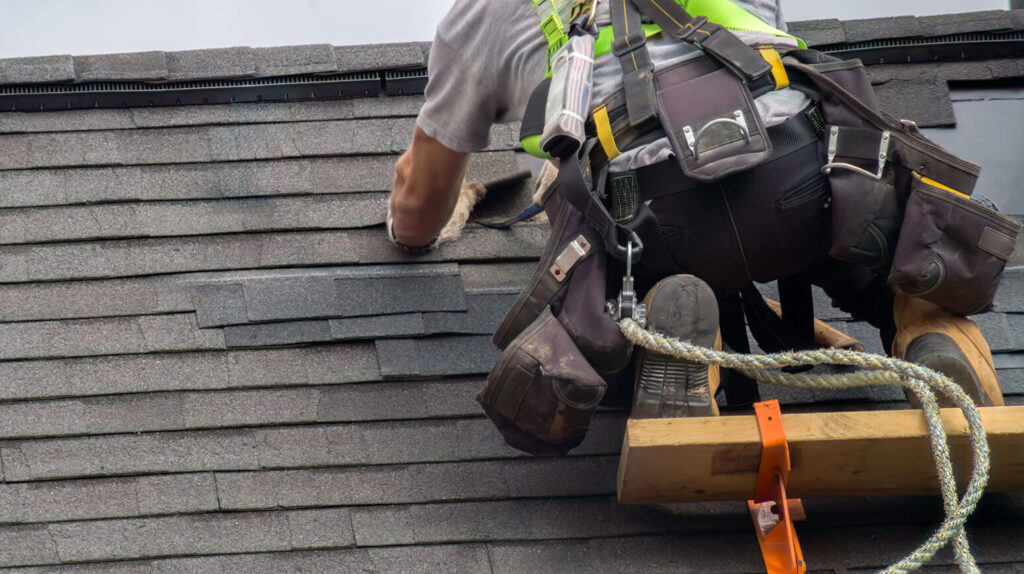
This is the part everyone actually notices. Starter shingles go down along the edges first, then the main field of shingles is installed in overlapping courses working up toward the ridge. Ridge vents and ridge caps finish the top of the roof.
More often than not, this step moves faster than tear-off, since there’s no demolition slowing things down, just methodical, repeatable installation.
Step 9: Cleanup
A serious roofing crew treats cleanup as part of the job, not an afterthought. Expect a magnetic roller pass across the yard and driveway to pick up stray nails, along with removal of leftover shingle wrappers, old flashing, and general debris. Gutters often collect granules and small debris during tear-off too, and a good crew clears those before calling the job finished.
Step 10: Final Inspection and Walkthrough
Before the crew leaves, expect a walkthrough where they point out what was done, answer any remaining questions, and confirm the property is clean. If a city permit was involved, a final building inspection needs to happen and pass before the project is officially closed out.
If your replacement was insurance-related, this is also the point where final documentation gets sent back to your insurance company to release any remaining depreciation holdback.
Step 11: Warranty and Paperwork
Keep every document from this project. That includes the manufacturer’s material warranty, your contractor’s workmanship warranty, the final permit sign-off, and any insurance paperwork. You’ll want all of it if you ever sell the home, file a future claim, or need warranty service down the road.
What Can Extend the Timeline
A few things reliably push a roof replacement past the expected one to three days.
Weather is the obvious one. Spring storm season in Northwest Arkansas can delay a scheduled start or even pause work mid-project if conditions turn unsafe for a crew to be on a roof.
Decking damage discovered during tear-off adds time, since sourcing and replacing plywood isn’t instant, especially if a large section needs attention. Permit timing can also slow things down slightly during peak season when building departments are handling a higher volume of applications. And if your project is insurance-related, waiting on adjuster scheduling or claim approval can add days or weeks before work even starts, regardless of how fast your contractor could move once given the green light.
Frequently Asked Questions
How long does a roof replacement actually take in Northwest Arkansas? Most average residential roofs take one to three days on site once work begins, though steep pitches, larger homes, or extensive decking repair can extend that.
Do I need a permit to replace my roof? In most NWA cities, yes, though the exact trigger varies. Fayetteville specifically requires a permit when any decking is being replaced, and generally allows shingles to be layered up to three times before a full tear-off is required.
What happens if my roof replacement is from storm damage? The process adds an insurance claim path: documentation of the damage, an adjuster inspection, and claim approval. Since 2024, Arkansas has also allowed insurers to settle wind and hail claims on an actual cash value basis once a roof passes seven years old, even on replacement-cost policies, so your roof’s age at the time of the storm matters more than it used to.
Does my roof’s age actually affect what my insurance will pay after a storm? Yes, more than it did before 2024. Arkansas now permits insurers to apply depreciation to wind and hail roof claims once a roof turns seven years old, even under a replacement cost policy, through a state-approved endorsement. A roof just past that mark can see a noticeably smaller payout than a slightly younger roof after an identical storm.
Can my contractor go back to the insurance company if something was missed? Yes. This is a standard part of the process called a supplement request, where your contractor asks the insurer to cover items the initial adjuster’s estimate missed, such as drip edge, ice-and-water shield, or code-required upgrades.
Should I be worried about contractors going door to door after a storm? It’s worth being cautious. Confirming a company has an established, permanent presence in Northwest Arkansas before signing anything protects you if a warranty issue comes up later.
Will I need to be home during the roof replacement? Not necessarily, though many homeowners prefer to be there for the initial walkthrough and the final inspection. The tear-off day is genuinely too loud to work from home comfortably.
What if the crew finds rotten decking once the old roof is off? This is common enough that it shouldn’t be alarming. A contractor should show you the affected area directly and explain the repair before proceeding, since it can add a modest amount to both cost and timeline.
Does my HOA need to approve my new roof? Some HOA communities, particularly ones with architectural guidelines, require approval on shingle color or material before installation. Check with your specific HOA if you’re in one, since this is separate from any city permit.
What should I do with my landscaping and vehicles before the crew arrives? Move vehicles out of the driveway the night before and expect the crew to cover nearby landscaping with tarps. Anything fragile inside near exterior walls, especially upstairs, is worth securing given the vibration from tear-off.
How do I know if my insurance claim will cover a full replacement or just repairs? That depends on the extent and pattern of the damage found during inspection. A detailed, photo-documented inspection before you file matters here, since it directly affects what your adjuster sees and how the claim gets evaluated.
What should I keep after the project is finished? Keep the manufacturer’s material warranty, your contractor’s workmanship warranty, the final permit sign-off, and any insurance documentation. You’ll want these if you sell the home or need warranty service later.
The Bottom Line
A roof replacement in Northwest Arkansas follows a fairly predictable sequence once work actually begins, but getting to that starting point often depends on whether a storm, a permit, or an insurance company is part of the picture. Knowing which path you’re on, and what each step actually involves, makes the whole project a lot less stressful to live through.
If you’re dealing with storm damage, an aging roof, or just want a second opinion before committing to a full replacement, TCG Roofing has walked homeowners across Fayetteville, Bentonville, Rogers, Centerton, and the surrounding area through this process for years.
Contact us to schedule an inspection and get a clear picture of what your specific roof actually needs.